Crowdsourced Clarity: How Amateur Archivists Are Outperforming Hollywood's Own Vaults
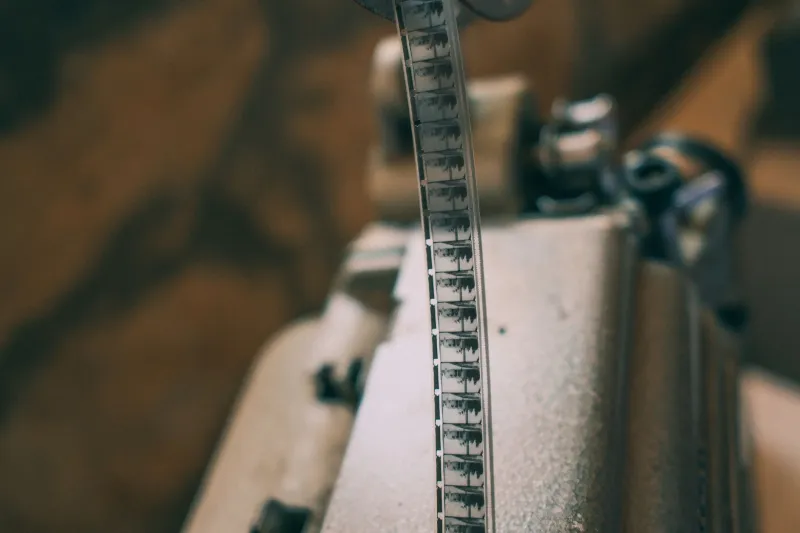
Somewhere in suburban Ohio, a retired electrical engineer named Marcus spends his evenings doing work that no studio has bothered to commission. Frame by frame, he is reconstructing a 1974 regional horror film that exists in only two known copies—one a water-damaged VHS dub, the other a 16mm print housed in a private collection in rural Pennsylvania. He has never been paid for this labor. He has no institutional affiliation. He operates, as he freely acknowledges, in a legal gray zone that could theoretically expose him to liability he would rather not contemplate.
Yet the restoration he completed last spring—uploaded quietly to a private server and distributed through a network of fellow enthusiasts—is, by any measurable standard, the finest version of that film currently available to any human being on Earth.
Marcus is not an anomaly. He is part of a growing, largely invisible economy of fan archivists who have concluded, with considerable justification, that if they do not do this work, no one will.
The Tools That Changed Everything
The technical barrier to serious restoration work collapsed with remarkable speed. Software packages that once required institutional budgets—DaVinci Resolve for color grading, Topaz Video AI for upscaling and noise reduction, VirtualDub2 for frame-level editing—are now either free or available for a few hundred dollars. AI-assisted tools have accelerated the process further, enabling a single determined individual to accomplish in weeks what once required a team of specialists and months of studio time.
The results have been, in numerous documented cases, genuinely startling. Fan restorations of obscure Italian genre films from the 1970s, American regional cinema from the same era, and underground works from the 1980s no-wave movement have circulated through collector networks and drawn comparisons—sometimes unflattering to the official product—with releases from respected boutique distributors.
"The studios have the original negatives and still manage to produce mediocre transfers," observes one restorer who works under a pseudonym and asked not to be identified by state of residence. "We're working from fourth-generation dubs and producing something cleaner. That should embarrass somebody."
Institutional Abandonment as Creative Catalyst
To understand why this parallel economy exists, it is necessary to understand the scale of institutional neglect that precedes it. The Library of Congress has estimated that approximately half of all American films produced before 1950 are lost entirely. The situation for low-budget, regionally distributed, or commercially unsuccessful films from subsequent decades is, in many respects, equally dire—not because the physical materials have necessarily been destroyed, but because no organization with resources has deemed them worth the investment of preservation.
The calculus studios apply to restoration is straightforward and, from a purely financial perspective, defensible: the cost of a serious 4K restoration can reach into six figures, and that investment makes sense only when a title carries sufficient commercial recognition to generate meaningful revenue. Films that fall below that threshold—the regional drive-in productions, the avant-garde experiments, the exploitation pictures with devoted but numerically modest followings—occupy a permanent waiting list that, in practice, never advances.
Fan restorers have effectively decided to stop waiting.
"There's a film I've been working on for fourteen months," says a restorer based in the Pacific Northwest who goes by the handle Celluloid_Salvage online. "The rights situation is complicated—the original production company dissolved in 1989, the director died in 2003, and nobody seems to know with certainty who owns what. I contacted three different entities that might have a claim. None of them responded. So the question becomes: do I wait indefinitely for a resolution that may never come, or do I do the work?"
He did the work.
The Legal Architecture of Necessary Ambiguity
The legal framework governing fan restoration exists in a state of productive vagueness that neither rights holders nor restorers appear particularly motivated to resolve. Restoration work itself—the act of improving image and audio quality—occupies a different legal position than simple reproduction or distribution, though the distinction has never been tested with sufficient clarity in American courts to provide restorers with genuine confidence.
Intellectual property attorneys consulted for this piece offered varying assessments. One characterized fan restoration as "transformative work that could plausibly qualify for fair use consideration, particularly when the underlying work is commercially unavailable." Another was considerably less optimistic, noting that transformation doctrine has historically applied more reliably to commentary and criticism than to technical enhancement.
What most attorneys agreed upon is that the practical risk to individual fan restorers remains low precisely because studios rarely find it commercially rational to pursue legal action against individuals distributing obscure films to small audiences. The calculus changes, theoretically, when a restoration achieves significant visibility—though even that threshold has proven difficult to define in practice.
The fan restoration community has developed its own informal ethics in response to this ambiguity. Most serious restorers operate on a principle they describe as "stewardship without profit"—distributing their work freely, declining to monetize it in any form, and withdrawing a restoration immediately if a legitimate rights holder makes a credible claim and demonstrates genuine plans for official release. This self-regulation has, thus far, largely insulated the community from the kind of confrontation that might force legal clarification.
When the Fan Archive Becomes the Official Record
Perhaps the most striking development in this space is the degree to which fan restorations have begun to function as de facto official records—the versions that scholars cite, that other enthusiasts reference, and that occasionally find their way, with varying degrees of acknowledgment, into legitimate distribution channels.
Several boutique distributors operating in the American cult cinema market have quietly licensed or incorporated fan restoration work into official releases, sometimes crediting the original restorer and sometimes not. The ethical dimensions of this practice are, to put it charitably, unresolved.
"I spent eight months on a restoration," recounts one restorer who discovered his work had been incorporated into a commercial release without attribution or compensation. "I'm not angry about the money—I never expected money. I'm troubled by the principle. The distributor profited from labor they didn't perform and didn't acknowledge. That's a conversation the industry needs to have."
It is a conversation the industry has, thus far, shown little enthusiasm for initiating.
A Symptom Worth Taking Seriously
The fan restoration economy is, simultaneously, an impressive demonstration of what motivated individuals can accomplish with accessible tools and a fairly damning illustration of how comprehensively official institutions have abdicated their responsibilities to the cinematic record. Both things are true, and neither cancels the other.
For the audience that Last Hole Cinema exists to serve—viewers who understand that the films no one is fighting over are frequently the ones most worth fighting for—the work these amateur archivists are performing is not a curiosity. It is, in many cases, the only reason certain films remain accessible at all.
The question worth sitting with is not whether fan restorers are heroes or pirates. The more productive question is what it reveals about the health of American film culture that the answer to institutional failure has been left, by default, to people working alone in their spare rooms—and that those people, against considerable odds, keep showing up to do the work anyway.