Deliberately Broken: How Indie Filmmakers Are Turning Technical Degradation Into a Distribution Manifesto
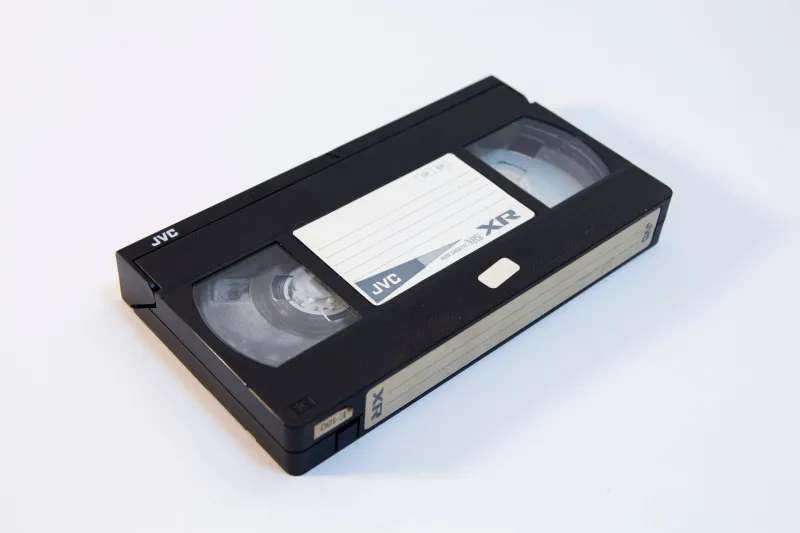
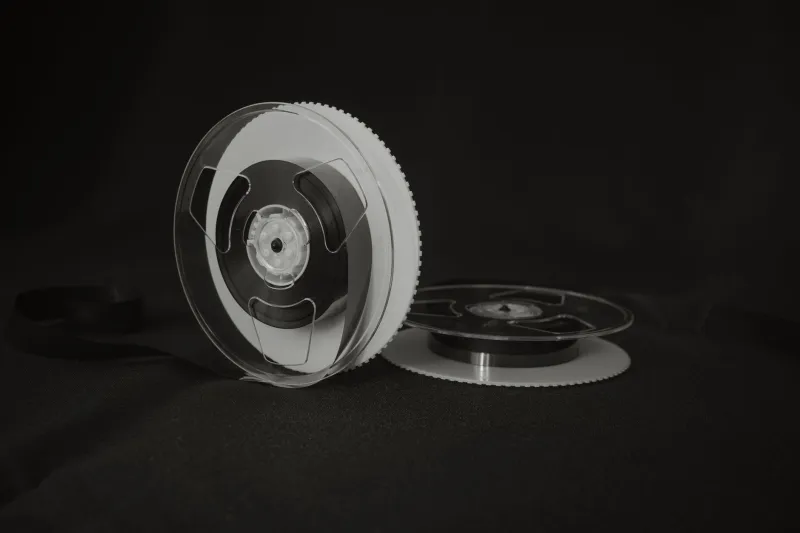
There is a particular kind of discipline required to make something look worse than it has to. In an era when a filmmaker with a modest laptop and a consumer-grade camera can produce footage indistinguishable from broadcast television, a small but increasingly visible community of American independent directors is doing precisely the opposite. They are seeking out decaying tape stocks, sourcing obsolete duplication equipment, and deliberately introducing visual noise, dropout artifacts, and analog distortion into their work — not because they lack the resources to do otherwise, but because they have concluded that clarity itself is the problem.
This is not nostalgia for its own sake. What is emerging across underground film circuits in cities like Chicago, Portland, and Richmond is something more considered: a distribution philosophy that treats the medium of delivery as an inseparable component of the work's meaning.
The Argument Against Perfection
To understand why a filmmaker would choose a third-generation VHS dub over a lossless digital file, it helps to consider what the latter has come to represent. Streaming platforms have spent the better part of a decade optimizing for frictionless consumption. Every element of the delivery infrastructure — from codec efficiency to interface design — is engineered to reduce the distance between a viewer and a recommendation algorithm's next suggestion. The image is clean. The audio is balanced. The experience is, by design, disposable.
For a particular kind of filmmaker, that disposability is the core offense. When your work is formatted to sit comfortably alongside ten thousand other titles in a genre category, the argument goes, something essential about its singularity is surrendered before a single frame is seen.
Low-fidelity distribution, in this context, functions as a form of resistance. A film that arrives on a hand-dubbed cassette with a photocopied insert cannot be algorithmically sorted. It cannot be auto-played. It demands a physical transaction, a deliberate act of seeking, and a tolerance for imperfection that filters the audience before the film even begins.
Format as Authorship
Several filmmakers working in this space have articulated a position that goes further than mere resistance to streaming culture. They argue that the chosen format actively participates in the film's meaning in ways that a neutral digital file cannot.
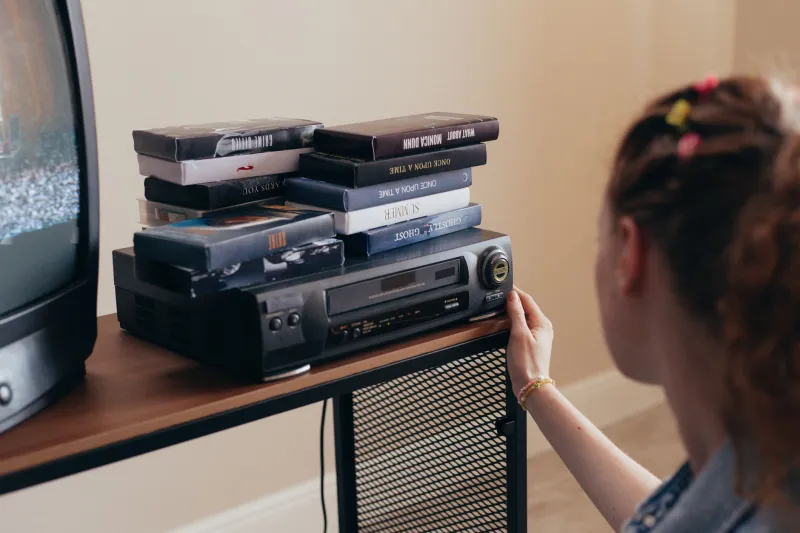
Consider the structural logic of a horror film distributed exclusively on VHS. The format carries with it a set of cultural memories — late-night rental stores, worn-out tapes with tracking problems, the particular texture of fear experienced on a cathode-ray screen in a darkened room. Distributing a horror film in this format is not simply an aesthetic flourish; it activates a whole architecture of viewer memory and expectation that a 4K stream, however technically superior, cannot access.
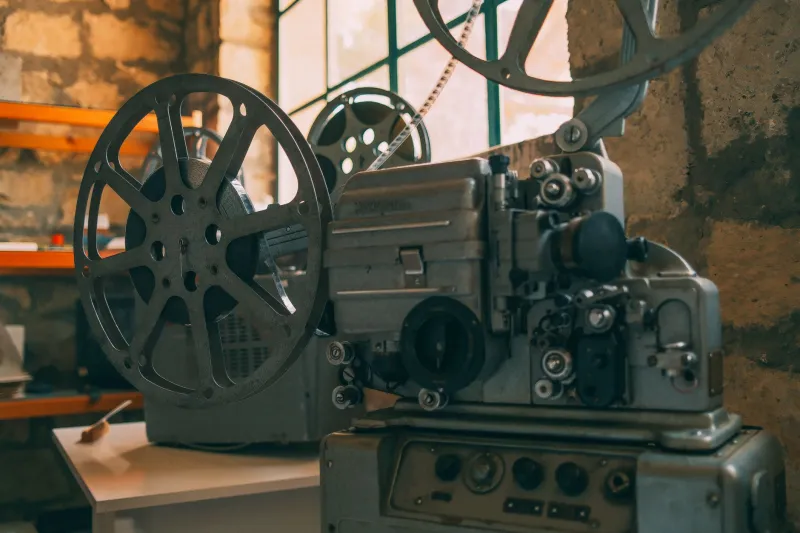
The same principle applies to 16mm prints circulated through underground screening networks. The grain, the splice marks, the occasional flicker of a worn print — these are not flaws to be tolerated. They are a record of the film's physical passage through the world, evidence that the object has existed in time and in the hands of other people. That history is part of what the viewer receives.
This is a genuinely radical proposition in an industry that has spent decades treating every visible artifact of the filmmaking process as a defect to be corrected.
The Market That Shouldn't Exist
Perhaps the most surprising aspect of this movement is that it has generated a functioning, if deliberately modest, economy. Underground film fairs in major American cities regularly feature tables stacked with hand-dubbed tapes and limited-run optical disc pressings. Mailing lists and zine networks serve as the primary distribution infrastructure, with print runs often numbering in the dozens rather than the thousands.
That scarcity is not incidental. It is structural. When a filmmaker announces that a given work will be available in a run of fifty physical copies and will never be uploaded to any streaming service, the announcement itself becomes a cultural event within the communities that follow this work. The film acquires a kind of gravity before it is seen.
This model inverts nearly every assumption of contemporary independent film distribution. There is no opening-weekend calculus, no platform acquisition deal to pursue, no SEO strategy for the trailer. There is instead a small, intensely engaged audience that has demonstrated its commitment through the act of seeking the work out in the first place.
For filmmakers who have spent years watching carefully made work disappear into the silence of streaming catalogs, this represents something genuinely valuable: an audience that already knows what it wants before the film begins.
The Critical Question of Accessibility
It would be incomplete to examine this movement without acknowledging the tension at its center. Deliberate inaccessibility, however artistically motivated, is not a neutral act. Distribution models that require physical purchase, geographic proximity to underground screening events, or membership in the informal networks through which these works circulate will, by definition, exclude audiences who lack the economic means, the geographic access, or the cultural capital to participate.
This is a criticism that some filmmakers in this space take seriously. The counterargument, when it is offered, tends to emphasize that the current dominant model of universal digital availability has not, in practice, produced equitable access to challenging cinema. A film buried on page forty of a streaming platform's genre results is not meaningfully accessible simply because it technically exists behind a subscription paywall.
The question of who gets to see difficult, unconventional work is not resolved by either model. But it is worth naming the ways in which aesthetic exclusivity can replicate, under different branding, some of the same gatekeeping dynamics it claims to oppose.
What the Mainstream Might Learn
Outside the immediate community of practitioners, this movement raises questions that extend well beyond underground cinema. The sustained audience engagement that low-fidelity distribution has managed to generate suggests something about what viewers are actually hungry for beneath the surface of streaming metrics.
Platforms track completion rates, skip patterns, and re-watch frequency. What they measure poorly, if at all, is the kind of investment that comes from an audience that has gone out of its way to find something. The underground distribution model, for all its deliberate inconvenience, may be producing exactly that investment — and doing so precisely because it refuses to optimize for anything.
There is, perhaps, a lesson here for independent filmmakers working within more conventional distribution frameworks: the relationship between a film and its audience is shaped not only by what is on screen but by the conditions under which the audience arrives at the screen. Format, scarcity, and the friction of discovery are not merely logistical variables. They are part of the work.
At Last Hole Cinema, we have long maintained that the films most worth finding are rarely the ones that find you first. The filmmakers examined here have built an entire distribution philosophy on exactly that premise — and the audiences gathering around their deliberately broken images suggest they may be onto something the rest of the industry is not yet equipped to measure.