Static as Scripture: How Tape Decay Became Cult Cinema's Most Authentic Preservation Language
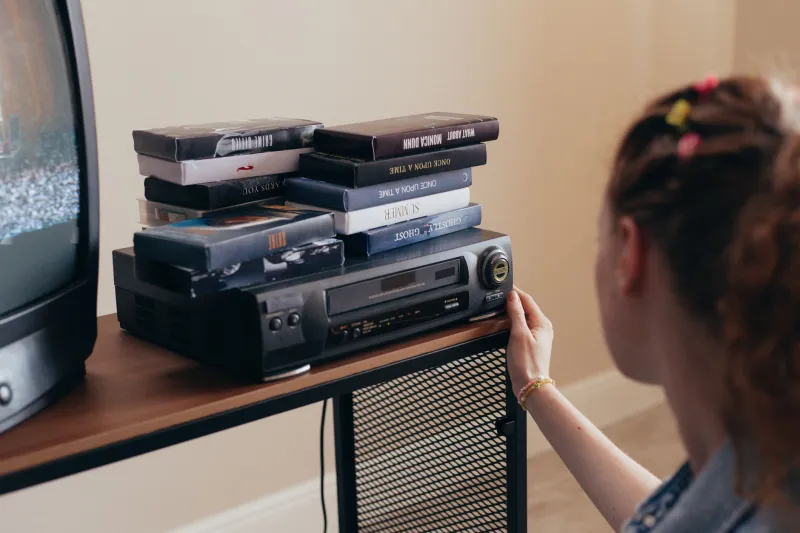
There is a particular quality of light that exists only on a deteriorating VHS tape — a horizontal shimmer, a color bleed at the edge of a performer's silhouette, a low hum beneath the audio that functions less like noise and more like atmosphere. For most of cinema's institutional gatekeepers, this constitutes damage. For a rapidly expanding community of underground filmmakers, collectors, and analog devotees, it constitutes truth.
The return to obsolete physical formats is not, at its core, a sentimental exercise. It is a considered rejection of what digital preservation has quietly become: a sanitizing process that irons out the texture of a film's original life and replaces it with a kind of archival taxidermy — preserved in appearance, evacuated of character.
The Digital Restoration Problem Nobody Talks About
When a cult film receives a boutique Blu-ray restoration, the event is typically framed as rescue. The language of salvation dominates press releases: saved from obscurity, painstakingly restored, finally seen as the director intended. Yet that final phrase contains a significant assumption — that the director's intention can be cleanly separated from the conditions under which their audience first encountered the work.
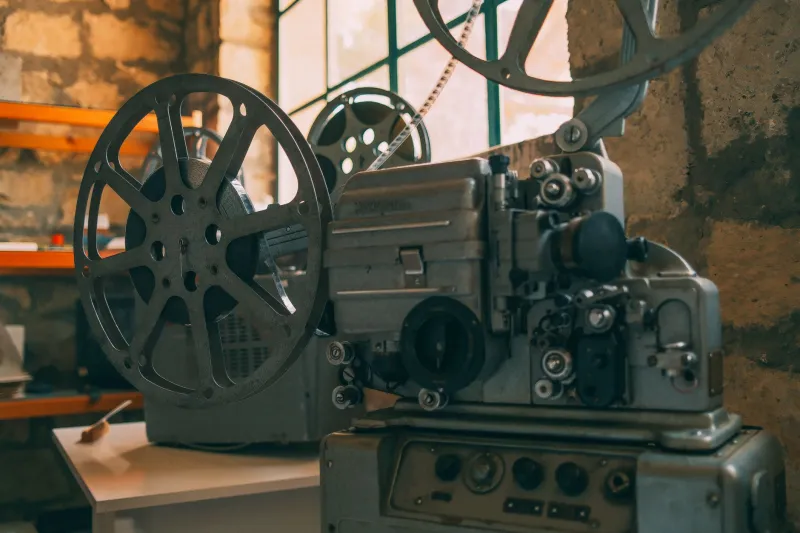
Many of the films that define underground American cinema were never seen in pristine form by the audiences who made them matter. They circulated on dubbed VHS copies passed between friends, screened on worn-down projectors in church basements and college common rooms, or arrived via mail-order catalogs with hand-typed descriptions. The degradation was not incidental to the experience — it was constitutive of it.
When that same film is reissued with noise reduction applied, grain digitally smoothed, and colors corrected toward a theoretical ideal, something genuinely is lost. Not merely atmosphere, but the record of how the film actually traveled through the culture. The tape artifacts are, in a very real sense, evidence.
Why Collectors Are Going Backward on Purpose
Across the United States, a network of collectors — many of whom operate small distro labels, maintain curated social media archives, or simply hold private collections of considerable depth — has begun actively seeking out the most compromised physical copies of films they already own in superior digital formats.
The reasoning varies in its specifics but converges on a shared premise: the degraded copy is the historically accurate one.
A LaserDisc pressing of an early-1980s regional horror film, for example, carries within its imperfections the precise transfer technology available at the time of its commercial release. The color timing reflects the choices made under the economic constraints of that pressing run. The audio compression artifacts are a document of the format's limitations as they existed for the actual audience. No 4K scan, however technically accomplished, can replicate that specific historical moment of transmission.
Some filmmakers have taken this logic further by releasing new work directly onto VHS as a deliberate curatorial statement. Independent horror and experimental film communities in cities like Portland, Chicago, and Austin have seen a notable uptick in limited VHS runs — not as marketing gimmicks, but as genuine distribution choices intended to control the experiential conditions of the work from the outset.
Scarcity, Physicality, and the Resistance to Algorithmic Curation
There is a second dimension to the analog resurrection that operates on more explicitly political terrain. Streaming platforms have introduced a model of film access that is simultaneously vast and deeply unstable. Titles appear and disappear according to licensing cycles, regional rights negotiations, and the opaque preferences of recommendation algorithms. A film can be available one month and effectively inaccessible the next, with no archival trace of its presence.
Physical formats resist this logic structurally. A VHS tape, however degraded, exists. It cannot be delisted. It cannot be geographically restricted after the fact. It cannot be quietly altered by a platform updating its content agreements. The object persists independent of any corporation's continued interest in its survival.
For collectors who have watched beloved titles vanish from streaming libraries with no announcement and no alternative, this quality of sheer physical persistence has taken on an almost ethical weight. Owning the tape is not merely a preference — it is a hedge against institutional abandonment.
The Aesthetics of Impermanence
What makes the current moment genuinely interesting, rather than merely reactive, is the degree to which analog degradation has developed its own aesthetic vocabulary — one that younger audiences, many of whom have no personal memory of VHS as a primary format, are engaging with on its own terms.
The visual grammar of tape decay — tracking errors, color saturation drift, the particular way magnetic dropout creates white horizontal lines across a frame — has become a recognizable cinematic language. It signals a specific relationship to time, to ephemerality, to the idea that a film exists within a material history rather than floating free of it in digital perpetuity.
This is not simply nostalgia, which tends to be passive and backward-looking. The analog revival is, in many of its expressions, a forward-facing argument about what cinema should feel like: contingent, physical, mortal.
What the Institutions Are Missing
The major archives and preservation bodies in the United States — the Library of Congress, the Academy Film Archive, the various university collections — do important work, and their contributions to film history are not in question here. But their institutional mandate is oriented toward the recovery and stabilization of original elements, toward the film as its creators first committed it to a medium.
What they are structurally less equipped to preserve is the film's subsequent life — the chain of copies, the successive generations of dubbing, the specific way a particular regional distributor's transfer looked when it played in a particular city at a particular moment. That history lives in the degraded copies. It lives in the physical objects that institutional preservation often treats as inferior approximations of a lost ideal.
The collectors and filmmakers driving the analog revival understand something that formal preservation has been slow to acknowledge: the copy is not a lesser version of the film. In many cases, the copy is the film, as it was actually known and experienced by the audience that gave it meaning.
Conclusion
The VHS resurrection is, at its most considered, a theory of what cinema history actually consists of. Not the pristine original, safely archived and occasionally screened for specialists, but the messy, degraded, physically compromised record of how films moved through the world and what they looked like when they arrived. The static is not interference. It is, for those willing to read it carefully, a form of testimony.