Nameless Until Now: The Detectives Rebuilding the Filmographies of Shot-on-Video Horror's Forgotten Faces
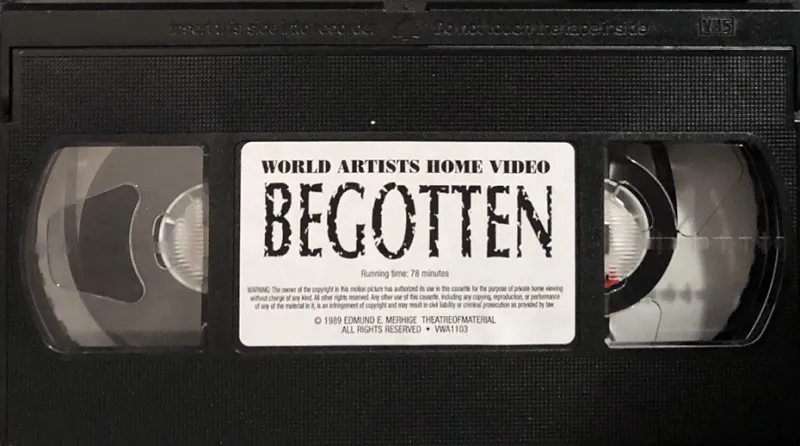
Photo: Label printed by World Artists Home Video, the distributor of the VHS., Public domain, via Wikimedia Commons
The tape rolls, the killer stalks, the credits crawl — and somewhere in that blur of fake studio names and misspelled crew jobs, an entire career goes unrecorded. Shot-on-video horror and regional exploitation cinema of the 1980s and 1990s employed hundreds of performers who appeared in dozens of titles without a single on-screen credit. Their faces are familiar to anyone who has spent a decade rifling through the horror sections of defunct video stores. Their names, in many cases, have been lost to everyone.
The Database Gap
IMDb is often treated as cinema's official memory, but its coverage of micro-budget regional video work is riddled with holes. Productions were frequently registered under LLCs that dissolved within a year. Screenings never occurred, so no newspaper listings exist to anchor a release date. When a film was sold at regional horror conventions out of a station wagon, no trade paper reviewed it.
The result is a structural erasure. A performer might appear in fifteen tapes across Ohio, Michigan, and Tennessee — playing the sheriff, the gas station attendant, the doomed neighbor — and exist online only as a first name in a fan forum post, if that.
Three Faces, Zero Credits
Consider the case researchers have come to call "the Mustached Deputy." He appears in at least eleven shot-on-video productions filmed around the Great Lakes region between 1987 and 1994, always in uniform, always uncredited. Fan sleuths cross-referenced a 1991 local news segment about one production with county records and a surviving call sheet scanned to a Facebook group. The name they recovered belongs to a man who worked as a corrections officer by day and drove two hours each way to film his scenes at night. He died in 2016, unaware that anyone had been looking.
Then there is "Scream Queen of Route 9," a label affixed by collectors to a woman who plays the final girl in three New Jersey–area tapes. Her performance in one of them — a haunted-woods feature shot on consumer camcorder — is genuinely startling, all raw nerve and improvised dialogue. Yet no publication ever printed her name. Current research suggests she may have been a theater student at a state college whose involvement ended when the production ran out of money.
A third figure, nicknamed "the Narrator" by collectors, provided voiceover for at least twenty regional horror and shot-on-video action tapes across the South. His baritone is instantly recognizable to tape collectors, a kind of regional answer to the trailer-voice tradition. His identity remains unconfirmed.
The Amateur Ledger
The people doing this work are not academics. They are tape collectors, former video store employees, and members of dedicated forums where a single screenshot can trigger a week of collaborative identification. Their methods are unglamorous: newspaper archives at public libraries, county property records, obituaries, high school yearbooks, and the occasional phone call to a surviving crew member.
What they have built amounts to a parallel filmography database — one organized by face rather than name, cross-referenced across productions that official databases treat as isolated, orphaned objects.
Why Credit Is Preservation
It is tempting to treat credit restoration as a sentimental gesture. It is more accurate to call it the forgotten front of film preservation. A film whose performers cannot be identified cannot be licensed cleanly, cannot be restored with proper documentation, and cannot be written into the historical record. Rights research begins with names. Scholarship begins with names. Without them, these films remain archival orphans no matter how many tapes survive.
Restoration labs have spent the last decade rescuing the image. The next decade's work may belong to the researchers rescuing the names — one county record, one obituary, one phone call at a time.