Shrink-Wrapped Devotion: When the Collection Replaces the Screening
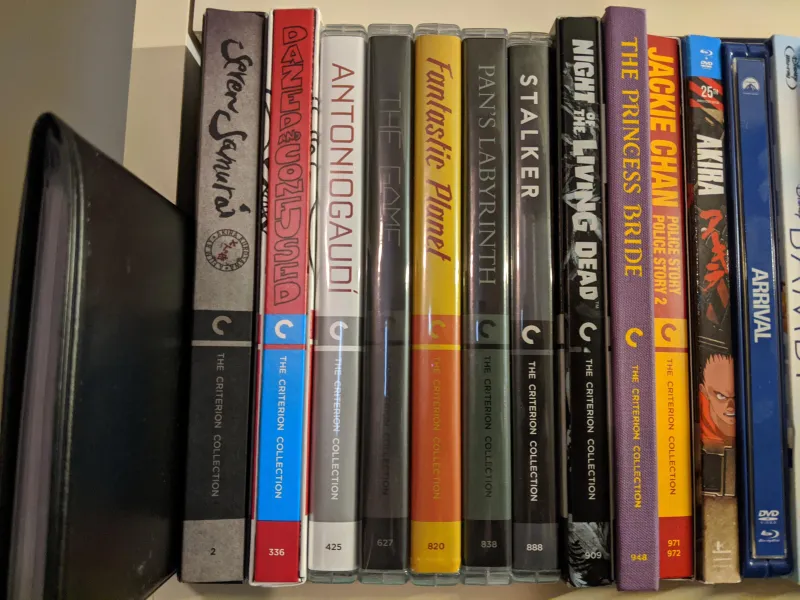
Photo: criterion collection style blu-ray box set shelf collection home, via i.redd.it
The Box Set as Trophy
There is a particular genre of social media post that has nothing to do with cinema and everything to do with acquisition: the neatly arranged shelf, spine numbers facing outward, factory shrink-wrap still intact. The caption is usually a variation on "mail day." The comments congratulate the poster not on their taste in films but on their taste in purchases.
Somewhere in the last decade, physical media underwent a strange inversion. The boutique edition — with its commissioned artwork, scholarly booklet, and immaculate transfer — was conceived as a monument to movies that deserved better than bargain-bin treatment. It has increasingly become something else: a status object, traded and displayed like sneaker drops, its value measured in scarcity and resale rather than in screenings.
The Economics of Devotion
To be clear, the publishers themselves are not the villains here. The boutiques have rescued hundreds of orphaned and neglected films, funded new restorations, and employed scholars to write essays that genuinely deepen appreciation. The problem is what the secondary market and the unboxing economy have done to the culture around them.
Limited editions sell out in hours, then appear on eBay at triple the price. Scalping, once the pathology of concert tickets, is now standard practice for a $39.95 Blu-ray. When an edition is instantly scarce, the incentive shifts from viewing to flipping. A film you actually open and watch is, in resale terms, a film you've damaged.
Watching as an Act of Defiance
There is a quietly radical gesture available to any collector: press play. Actually watch the thing. Wear out the disc. Lend it to a friend who's never seen it. The collectors who matter to the health of film culture are not the ones with the most complete shelves but the ones whose editions show hairline scratches from use.
This is not an argument against collecting. Owning physical media in the streaming era is a legitimate and increasingly necessary act of preservation — catalogs rotate, licenses lapse, and the cloud is not an archive. But ownership is the beginning of a relationship with a film, not the consummation of one. A sealed edition is a promise; only viewing redeems it.
What the Spine Number Can't Do
The number on the spine tells you nothing about the film. It cannot convey whether a movie moved you, whether you argued about it afterward, whether it changed how you see a genre or a city or yourself. Those experiences are the actual collection, and they are the only part of this hobby that appreciates over time.
So here is a modest proposal for the community: post less about mail day, more about movie night. Open the box. Crack the case. If your shelf is a museum, it has failed; if it is a library, it is working. The films we love survived decades of neglect to reach us. The least we can do is press play.