Static, Silence, and Serendipity: How Late-Night Cable Built the Cult Film Canon Before the Internet Existed
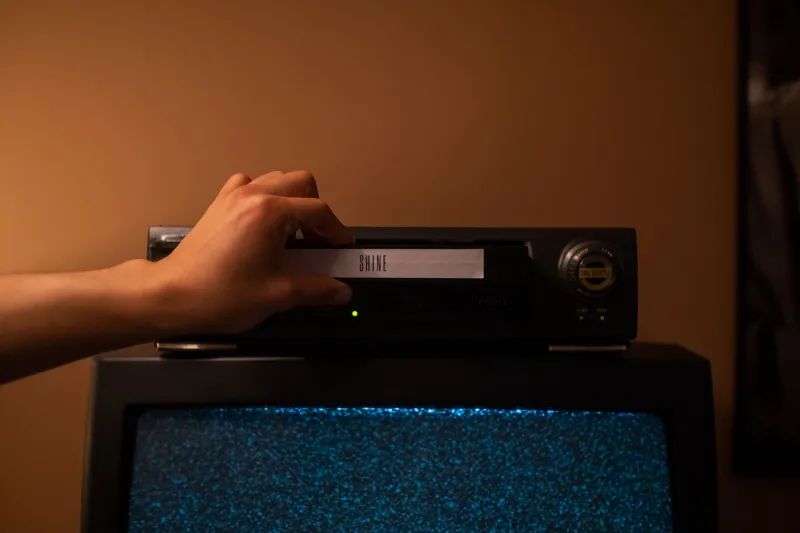
There is a particular quality of attention that belongs exclusively to 2:47 in the morning. The house is quiet. The television casts the only light. Whatever appears on that screen arrives without competition, without context, and without the safety net of a recommendation engine telling you whether it is worth your time. It simply exists, and you either stay with it or you do not.
For roughly two decades — spanning the mid-1980s through the late 1990s — that condition produced something no streaming platform has managed to engineer: a genuine discovery culture around films that had no other viable path to an audience. Late-night cable was not a distribution strategy. It was, at best, a cost-effective way for regional and national cable operators to fill dead air with cheaply licensed content. But the accidental consequence of that economics was the construction of the most effective underground cinema delivery system the United States has ever produced.
The Economics of Dead Air
To understand why the midnight window functioned as it did, it helps to understand what cable programmers were actually solving for during those hours. Prime time inventory was expensive and competitive. The 2 AM block was not. Licensing fees for older exploitation titles, foreign genre films, low-budget science fiction, and the broader catalog of American International Pictures-era cinema were negligible compared to anything a network would consider for earlier slots.
This created an unintentional curatorial logic. Films that had failed theatrically, been passed over by video distributors, or simply lacked the mainstream profile to justify prime-time placement found themselves broadcast into living rooms across the country at hours when only the most committed — or the most insomniac — viewers were present. The audience self-selected with remarkable efficiency. If you were awake at 2 AM with a television on, you were, almost by definition, someone whose relationship with film extended beyond the multiplex.
Channels such as USA Network's Night Flight, HBO's late-night programming blocks, and the various regional cable operators running independent film packages were not programming for casual viewers. They were, without intending to, programming for exactly the kind of audience that cult cinema requires: patient, curious, and willing to sit with something strange.
The VCR as Cultural Memory
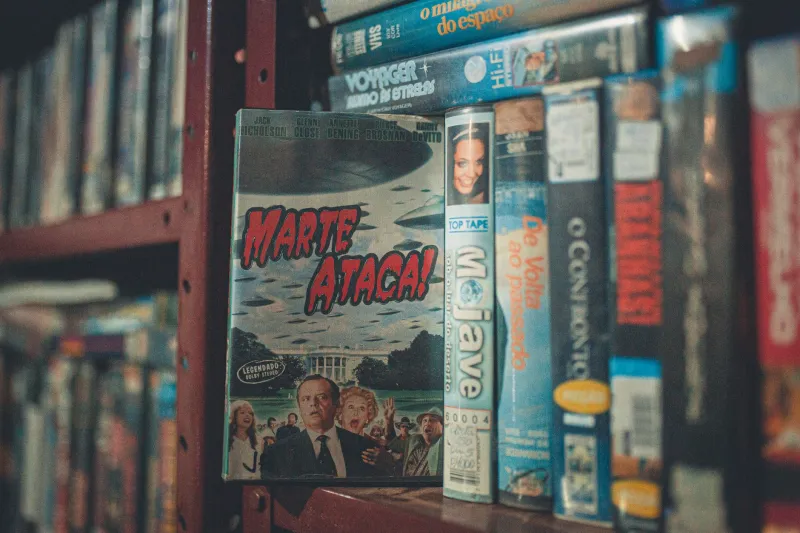
What transformed late-night cable from a passive experience into an active community was the VCR timer. The ability to schedule a recording before going to sleep meant that viewers could pursue films they had heard about through word of mouth — a mention in a fanzine, a reference in a film magazine, a conversation at a record store — without having to sacrifice sleep to do it. The tape became an artifact. People traded them. Collections formed around them.
This circulation of recorded cable broadcasts constitutes one of the most significant and least formally documented periods in American cult film culture. Films that would not receive home video releases for years, if ever, existed primarily as nth-generation VHS copies recorded off cable and passed between enthusiasts. The degradation of the image — the tracking lines, the washed-out color, the occasional dropout — became inseparable from the experience of the film itself. Watching a bootleg cable recording of something obscure carried its own aesthetic signature, one that many viewers of that era still associate with the pleasure of discovery.
The physical nature of the exchange also meant that recommendations carried weight. When someone handed you a tape, they were investing something tangible. The social infrastructure around late-night cable recordings was, in retrospect, a primitive but functional version of what streaming platforms now attempt to simulate with curated lists and collaborative filtering — except that it was built on personal relationships rather than behavioral data.
Appointment Viewing as Critical Framework
Modern streaming operates on the premise that friction is the enemy of consumption. The ideal platform experience, as currently designed, eliminates every barrier between the user and the content: instant access, no scheduling, no commitment, infinite substitutes available at a single click. What this model cannot account for is the degree to which friction generates investment.
Late-night cable imposed a specific kind of productive friction. A film broadcast at 2 AM on a Tuesday could not be paused, rewound in real time, or abandoned without consequence — if you left, it continued without you, and you might not encounter it again for months, if ever. This ephemerality produced a quality of attention that on-demand viewing structurally discourages. The viewer who stayed with a difficult or disorienting film at 2 AM did so under conditions that rewarded commitment and penalized distraction.
The effect on taste formation was significant. Films that would now be dismissed after ten minutes of half-attentive streaming — because something else is always immediately available — received the full duration of a viewer's focused engagement simply because the alternative was a blank screen or a shopping channel. Many of the titles that define the American cult canon were first encountered under precisely these conditions.
What the Algorithm Cannot Replicate
Current recommendation systems are sophisticated instruments for delivering more of what a viewer has already demonstrated they enjoy. They are, by design, confirmation engines. The late-night cable slot operated on an entirely different principle: it delivered what was available, not what was predicted to be wanted. The gap between those two approaches is where discovery actually lives.
No algorithm would have recommended a subtitled Italian giallo to a viewer who had only previously watched mainstream American horror. No behavioral model would have surfaced an obscure New Zealand horror-comedy to a teenager who had no prior exposure to antipodean cinema. Yet these are precisely the kinds of encounters that late-night cable facilitated — encounters that, in many documented cases, permanently redirected viewers' relationship with film.
The randomness was not incidental. It was the mechanism. Discovery requires exposure to the genuinely unexpected, and the unexpected cannot be generated by a system trained on existing preferences. Late-night cable was unpredictable because it was underfunded and indifferent to the viewer's prior history. That indifference, paradoxically, made it more useful as a discovery tool than any system designed with discovery explicitly in mind.
What Remains
The late-night cable window closed gradually, displaced first by the expansion of premium cable content into all hours and then by the consolidation of licensing catalogs that made cheap fill programming less available. By the early 2000s, the conditions that had sustained it — cheap licensing, indifferent scheduling, and a captive insomniac audience with VCRs — had dissolved almost entirely.
What remains is the community those broadcasts built, and the canon they assembled. Many of the films now celebrated on boutique physical media labels, discussed on specialty podcasts, and traded among collectors were first encountered in that midnight window. The audiences that late-night cable created did not dissolve when the broadcasts stopped; they migrated, carrying their catalogs and their commitments with them.
For a site like this one, dedicated to the proposition that forgotten films deserve audiences, that migration is the entire story. The infrastructure changes. The films do not. What late-night cable understood, however accidentally, is that the right film and the right viewer will find each other — provided something other than an algorithm is allowed to make the introduction.