Finished Is a Trap: How Independent Filmmakers Are Using Incompletion as a Corporate Shield
There is a particular anxiety that haunts the independent filmmaker in the United States: the moment a finished film becomes visible, it also becomes vulnerable. Completion, paradoxically, is the point at which creative control begins to erode. Distribution deals arrive dressed as opportunities. Option agreements are signed under financial duress. And somewhere between the festival circuit and a streaming platform's algorithm, the original vision gets quietly renegotiated out of existence.
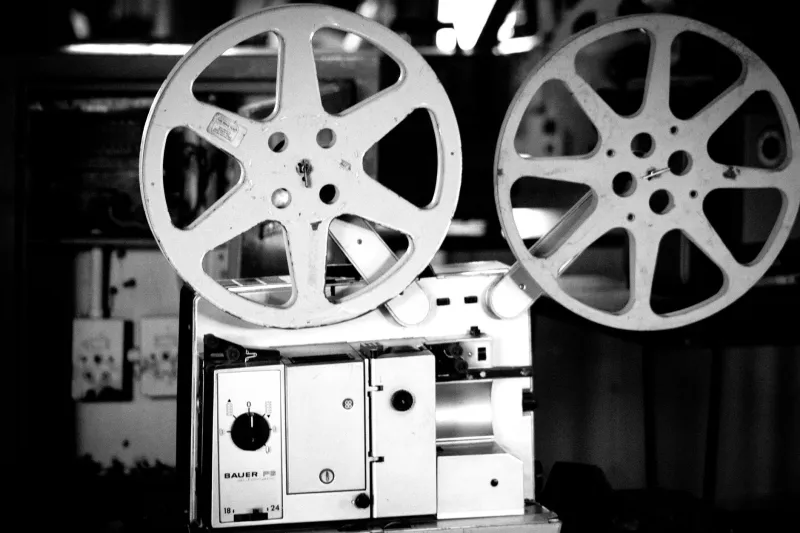
A loosely connected cohort of filmmakers has arrived at an unusual countermeasure. Rather than completing their films in any conventional sense, they are releasing deliberately unfinished cuts — rough assemblies, temp-tracked mixes, dialogue-heavy work prints stripped of final color grading — into circulation through channels that exist well outside the mainstream distribution infrastructure. The strategy is counterintuitive enough to be worth examining in detail.
The Legal Architecture of the Unfinished
To understand why incompletion functions as a shield, it helps to understand what studios are actually acquiring when they option an independent film. In most cases, the transaction involves a completed, deliverable work — one that meets specific technical and contractual standards. A film with missing sound design, uncleared music cues, rough visual effects, or no final color pass does not satisfy those standards. It cannot be licensed to a streaming platform. It cannot be exhibited theatrically without significant remedial investment.
This creates a narrow but meaningful loophole. A film that is technically unfinished exists in a kind of acquisitional dead zone. It can be seen — screened at underground venues, distributed on obscure file-sharing networks, passed between enthusiasts on physical media — without triggering the conditions that make it worth pursuing through formal channels. The cost of finishing it, for a studio evaluating an acquisition, often exceeds the speculative return.
Several directors operating in this space have described the strategy in almost architectural terms — as a deliberate construction of legal friction. One filmmaker, whose debut feature has circulated in a work-print form for over two years across a network of underground screening collectives in cities including Chicago, Portland, and Philadelphia, described the decision as less about aesthetics than about survival. "The moment you hand them something they can package," he explained, "you've already lost the argument about what it means."
Imperfection as Provenance
What is particularly striking about this movement — if it can yet be called that — is the degree to which the rough cut has acquired its own cultural currency. Within the communities that actively seek out these circulating works, the unfinished state is not experienced as a deficiency. It functions, instead, as a marker of authenticity.
This is not an entirely new phenomenon. Bootleg recordings in the music world have long carried a documentary intimacy that polished studio releases cannot replicate. Work prints and rough assemblies of canonical films — Orson Welles's various incomplete projects, early circulating cuts of films later substantially re-edited — have historically commanded intense interest among cinephiles precisely because they reveal process rather than product.
What is new is the intentionality. Earlier work prints circulated accidentally, through theft, archival neglect, or the collapse of production companies. The filmmakers now operating in this mode are making a conscious choice to distribute the rough version first — and in some cases, exclusively. The unfinished cut is not a placeholder. It is the release.
One director whose film has screened in this form at a series of invitation-only events across the Southwest was candid about the dual function of the approach. "It keeps the suits away," she said, "but it also keeps the film honest. There's something in a rough cut that a finished film buries. The seams are visible. The decisions are visible. I think that matters."
The Distribution Infrastructure of Deliberate Obscurity
Circulating an unfinished film requires an infrastructure that operates at a significant remove from conventional distribution. The channels being used vary considerably in their formality and their reach.
Some filmmakers are working through underground screening networks — loose associations of curators, collectors, and enthusiasts who organize private or semi-private events outside the festival system. Others are using encrypted file-sharing communities, private Discord servers, or physical media distributed through mail networks reminiscent of the VHS tape-trading circuits that sustained cult cinema in the 1980s and early 1990s. A smaller number are using limited, unlisted online uploads — accessible only to those who already know to look.
The common thread across these channels is deliberate inaccessibility. The friction is the point. A film that requires effort to find is a film that self-selects its audience, filtering out casual consumption and the kind of algorithmic attention that tends to attract corporate interest.
This inaccessibility also functions as a form of community-building. The shared effort of locating and experiencing these films creates a social bond among viewers that mainstream distribution cannot manufacture. Several participants in these networks described a sense of obligation — a feeling that seeing the film conferred a kind of responsibility toward it.
The Risks the Strategy Cannot Eliminate
It would be dishonest to present this approach without acknowledging its considerable vulnerabilities. The legal protection offered by incompletion is real but not absolute. A studio sufficiently motivated by a project's commercial potential could finance the completion of a film it acquired at the rough-cut stage, particularly if the underlying rights — the screenplay, the underlying source material — were separately acquirable.
There is also the question of the filmmaker's own interests. Indefinite incompletion forecloses certain forms of recognition and revenue. Films that never achieve a finished, distributable form cannot win major awards, cannot generate meaningful licensing income, and cannot reach audiences beyond the relatively small communities actively seeking out underground material. For filmmakers who need their work to sustain a career, the strategy carries a real cost.
And there is the matter of preservation. Rough cuts circulating through informal networks are subject to the same degradation and loss that has claimed so much of cinema's peripheral history. Without institutional support, these films are genuinely at risk of disappearing — which, for some of the filmmakers involved, may be a tolerable outcome, but for the broader culture represents an irreplaceable loss.
What This Tells Us About the State of Independent Film
The emergence of deliberate incompletion as a distribution strategy is, at its core, a symptom of a broken relationship between independent filmmakers and the institutions nominally designed to support them. When the act of finishing a film becomes a liability rather than an achievement — when completion itself is the mechanism by which creative control is transferred — something has gone seriously wrong with the infrastructure of independent cinema in this country.
Last Hole Cinema has always operated from the conviction that the films most worth finding are rarely the ones most easily found. The rough cuts circulating through these underground networks are, in a very real sense, the purest expression of that principle: works that exist because someone made them, distributed on terms the maker controls, reaching audiences willing to do the work of finding them.
Whether this constitutes a sustainable model or a temporary act of resistance against an industry that will eventually adapt and absorb it remains genuinely uncertain. What is not uncertain is that the filmmakers pursuing this path have identified something real: in the current landscape of American independent cinema, incompletion may be the most honest form a film can take.