After Hours, Off the Grid: Inside America's Basement Screening Economy
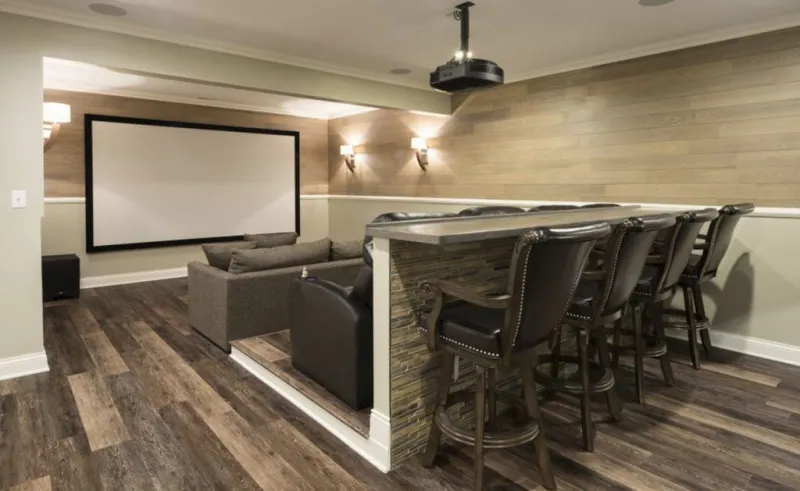
Photo: basement gathering folding chairs projector screen informal film screening, via i.pinimg.com
There is a screening happening this weekend that will not appear on any festival listing, any streaming platform, or any publication's calendar. It is taking place, in all likelihood, in a basement in a mid-sized American city, or a rented storefront with folding chairs and a borrowed projector. Twenty to eighty people will attend. Admission will be cash or a modest suggested donation. By Monday, the film will exist only in the memories of the people who were there.
This is the rent party model — borrowed, consciously or not, from the Harlem tradition of the 1920s, when musicians turned private homes into provisional venues. A century later, underground filmmakers have rebuilt it for the streaming age.
The Economics of Eighty Chairs
The financial math of these events is brutally simple. A storefront rental in a secondary market might run a few hundred dollars for a night. A projector and screen are usually borrowed or owned. Sound may be a pair of powered speakers. Organizers recoup costs through door donations — typically ten to fifteen dollars — and anything beyond break-even goes to the filmmakers, who are, without exception, unpaid everywhere else.
What makes the model viable is that nobody expects a margin. These are not businesses. They are mutual-aid arrangements among people who need an audience and people who want to be the first to see something that does not exist anywhere else.
The Licensing Gray Zone
Ask three organizers about licensing and you will get three careful answers. Most operate in a deliberate ambiguity: original works screened by their creators or with the filmmaker's direct blessing generally raise fewer questions than public exhibitions of copyrighted material, and many organizers simply avoid screening anything they do not have a personal relationship to. Others obtain single-event public performance licenses when the work's rights situation allows it.
The practical reality is that these events are small, ephemeral, and invisible to enforcement — not because they are nefarious, but because they are, by design, beneath the threshold of notice. Organizers describe the strategy as staying small on purpose: no ticketing platforms, no advance publicity beyond word of mouth and encrypted group chats.
Intimacy as the Product
What these venues offer cannot be replicated by a streamer: the filmmaker answering questions three feet from the audience, the film interrupted by a barking dog and improved by it, the sense that attendance itself constitutes membership in something. Several organizers describe their events as closer to record-listening parties than to cinema.
The question hanging over the network is whether that intimacy survives its own popularity. A few basement series have grown into recognized institutions, and with growth come the pressures they were built to escape — sponsors, permits, expectations. The organizers who have lasted longest tend to describe a ceiling they refuse to break: a fixed number of chairs, a fixed circle of trust.
Why It Matters
Streaming promised universal access and delivered uniformity. The basement circuit offers the opposite bargain: total scarcity, total presence. For underground filmmakers whose work will never clear a festival's programming committee or a platform's content review, it is not a consolation prize. It is the only exhibition model that was never closed to them in the first place.