One Film, Then Silence: The Vanishing Acts of Cinema's One-Hit Visionaries
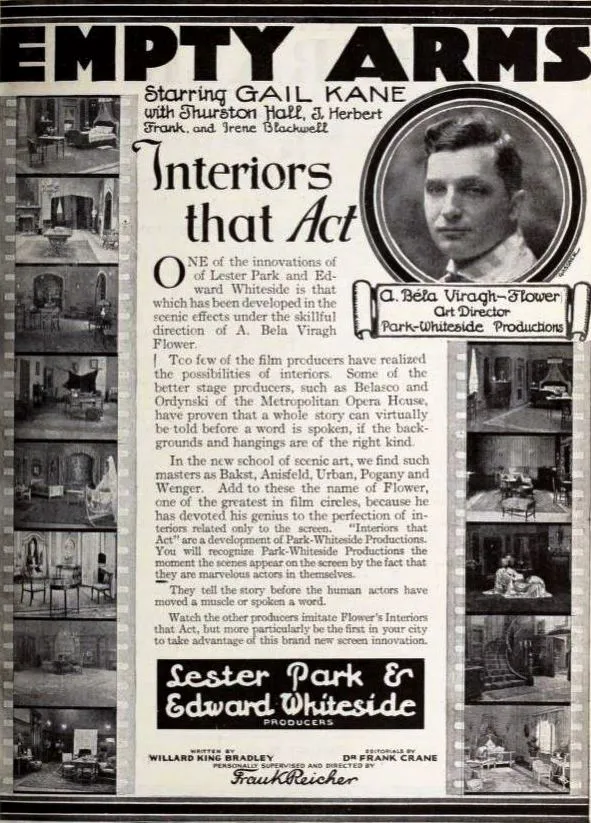
Photo: Park-Whiteside Productions / Photoplay Libraries Inc., Public domain, via Wikimedia Commons
The Mystery of the Single Statement
Every few years, a filmmaker arrives from nowhere, delivers something so strange and complete it seems to have no ancestry, and then simply stops. Not fails — stops. The pattern is one of underground cinema's most persistent riddles, and it raises an uncomfortable question: what does the system do to people who succeed on their own terms?
Below are five directors who made one enduring work and walked away. Each entry includes where their film currently streams in the US, because these are titles you should see while they remain legally available.
1. The Outsider Who Refused the Second Act
A handful of one-film directors made a conscious decision to quit at the top. Their reasons tend to be less dramatic than fans hope: the process was grueling, the financing was soul-crushing, and the finished film said everything they needed to say. One such director, whose jagged urban drama became a staple of late-night broadcast rotation in the 1980s, spent the following decades as a high school art teacher, reportedly content. The film remains a touchstone of regional American grit and currently streams on a major ad-supported platform, though its availability has lapsed twice in five years — a reminder that these works live on borrowed time.
2. The Casualty of Distribution
Not all exits are voluntary. More than one masterpiece died on the vine because its distributor folded mid-release, stranding the film in a rights limbo that outlasted the director's momentum. By the time the picture was rescued, the moment had passed, the crew had scattered, and the director had moved into commercial editing work. Their film — a hypnotic desert-set fever dream — was eventually canonized by critics a decade too late. It is currently only available on a boutique streamer's rotating catalog; catch it before the next licensing shuffle.
3. The Burnout Case
Making a film outside the system means being producer, promoter, and therapist simultaneously. At least one beloved underground director has spoken frankly about the years of debt and personal collapse that followed their debut, a scrappy horror oddity that found its audience entirely through tape trading. They never made a second film, and they have said they never wanted to. The movie itself streams free on Tubi at time of writing — a strange fate for a work its creator describes as "the most expensive mistake of my life."
4. The One Who Left the Country
A different kind of disappearance: the director who completed a cult classic, watched it get embraced overseas, and relocated entirely, choosing anonymity over a career. Their single feature, a slow-burn mystery shot on weekends over four years, has been characterized by archivists as one of the great American independent debuts. It is not currently streaming anywhere domestically; a region-free import Blu-ray is the only legitimate route.
5. The One We Simply Don't Know
The final entry is the most haunting: a director whose film surfaced at a single festival, earned rapturous notices, and whose subsequent biography is essentially blank. No interviews, no follow-up projects, no public record. The film survives because a fan community preserved it, and it recently appeared on a niche streaming service specializing in rescued oddities. Whether its creator is alive, retired, or simply uninterested in being found is unknown.
What the Silence Tells Us
Taken together, these stories suggest that one great film is not an accident of talent but often a verdict on the industry itself. Some of these directors were broken by the process; others looked at the second-film machine and declined. Either way, their solitude is a data point the industry rarely counts. Watch their films while you can — availability, like their filmographies, is never guaranteed to last.