The Virtue of Damage: Why Certain Underground Films Should Never Be Restored
The case for film restoration is, in most circumstances, straightforward enough that it barely requires articulation. A damaged print obscures the filmmaker's intentions. A degraded transfer substitutes noise for information. Restoration removes the interference and returns the viewer to the original work. This logic is sound, and it has produced remarkable results across decades of archival effort, returning films by directors from Buster Keaton to Andrei Tarkovsky to something approaching their intended condition.
But there is a category of cinema for which this logic fails—or, more precisely, for which it applies so mechanically that it produces the wrong outcome. For certain underground films, particularly those produced on video in the 1980s and 1990s, those shot on degraded stock by filmmakers working without resources, or those whose entire aesthetic premise depends on the rawness of their recording medium, the restoration impulse does not return the viewer to the original work. It replaces the original work with something cleaner, more presentable, and fundamentally different.
What the Damage Is Doing
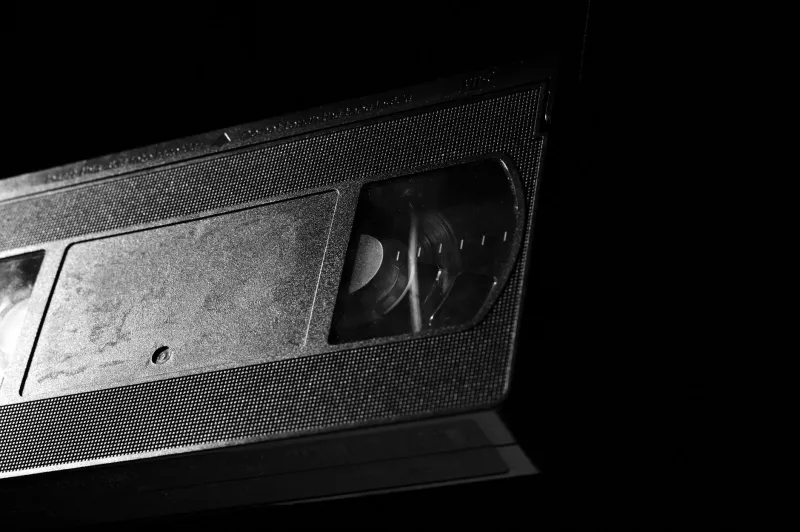
To understand why degradation can be constitutive rather than merely incidental, it helps to think carefully about what certain underground films were actually made to do. A shot-on-video horror film from the mid-1980s, produced for a regional market and duplicated on consumer-grade equipment, was not a compromised version of a hypothetical 35mm production. It was a distinct object, and its visual texture—the smeared colors, the analog noise, the interlaced scan lines—was not separable from its effect on the viewer.
This is not simply nostalgia talking, though nostalgia is certainly present in some of the enthusiasm for degraded formats. It is a claim about how meaning is produced in film. The grain of a film stock, the luminance noise of a video signal, the compression artifacts of a low-bitrate digital encode—these are not neutral carriers of image information. They shape how the image is received, what emotional register it occupies, what relationship the viewer is invited to have with the material on screen.
A documentary shot on early digital video in a community experiencing genuine crisis carries information in its visual texture that a restoration cannot preserve. The shakiness, the blown-out highlights, the color cast of consumer-grade optics—these are not problems with the image. They are part of what the image knows.
Filmmakers Who Said No
Several American filmmakers working in underground and regional genres have actively resisted restoration efforts directed at their earlier work, and their reasoning is instructive. One director whose shot-on-video features from the late 1980s have developed a cult following among horror collectors described being approached by a boutique label interested in producing a restored edition. The director declined, explaining that the restoration samples they had been shown removed precisely the quality that had made the films feel dangerous when they were new—the sense that the camera was present at something it was not supposed to be recording.
Another filmmaker, whose experimental video work from the early 1990s circulates primarily through collector networks in transfers of varying quality, has expressed a preference for the most heavily degraded versions in circulation. The deterioration, in their view, is part of the work's ongoing life—a record of its passage through time and hands that the original master cannot contain.
These positions are not universally shared among filmmakers whose work exists in degraded form. Many directors would welcome the resources to present their films in the best possible condition, and their preference deserves respect. The point is not that restoration is always wrong, but that the assumption that restoration is always right is itself an error.
The Collector's Preference
Among dedicated collectors of cult and underground cinema, the preference for degraded source materials is more common than the mainstream film culture tends to acknowledge. This preference is sometimes dismissed as contrarianism or as the fetishization of scarcity—a way of distinguishing one's viewing experience from the general public's. These motivations are real and should not be entirely dismissed.
But they do not fully account for the phenomenon. Collectors who have access to both restored and unrestored versions of the same film and consistently choose the latter are making an aesthetic judgment, not merely a social one. They are reporting that the damaged version is, for them, the more rewarding viewing experience—that it delivers something the restoration does not.
What it delivers, in many cases, is a quality of authenticity that pristine presentation undermines. A cult film that built its reputation through decades of circulation on increasingly worn VHS copies has a relationship with its own degradation that a 4K restoration cannot simply override. The restoration may be technically superior. It is not necessarily the same film.
The Streaming Platform's Dilemma
For streaming services attempting to serve the cult film audience, this creates a genuine curatorial challenge. The standard assumption is that the highest-quality available transfer is the appropriate version to present. For most films, this assumption is correct. For the category of work described here, it may actively mislead the audience about what the film is.
A small number of boutique services have begun to grapple with this, offering degraded transfers alongside restored versions where both exist, or providing contextual notes that explain the significance of the source material's condition. These are encouraging developments, though they remain exceptional rather than standard practice.
The broader streaming ecosystem has not yet developed the vocabulary to handle this complexity. Films are categorized by resolution, not by the relationship between their visual texture and their meaning. Until that changes, the viewer who understands why a particular film is better in terrible quality will continue to seek out the terrible-quality version through whatever means are available—and will frequently be right to do so.