The Last Reel Standing: How Regional Film Societies Became Cult Cinema's Final Refuge
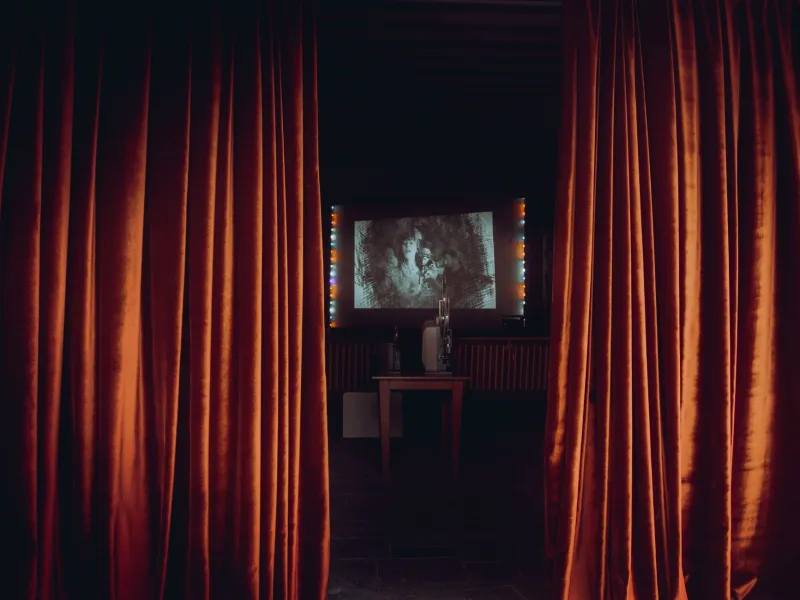
Somewhere in a repurposed church basement in Missoula, Montana, forty-three people are watching a 16mm print of a film that does not exist on any streaming platform, has not been commercially available since 1987, and whose rights situation is so tangled that no boutique distributor has dared touch it. The print is scratched. The projector occasionally hiccups. Nobody in the room appears to care. They are, by any reasonable measure, among the only people in the country watching this film tonight — and the film society responsible for the screening has been operating in this precise manner, without fanfare or monetization, for the better part of two decades.
This is not an anomaly. It is, increasingly, a pattern.
The Gap That Algorithms Cannot Fill
The consolidation of streaming has produced a curious paradox: the more platforms that exist, the smaller the percentage of meaningful cinema that becomes genuinely accessible. Licensing costs, territorial restrictions, rights disputes, and the commercial indifference of major distributors conspire to leave enormous swaths of cult and underground filmmaking effectively invisible to anyone without specialized knowledge and unusual persistence.
Digital piracy was once presumed to be the answer to this problem. And for a period, it functioned as a rough corrective — gray-market torrent communities and underground archives kept prints circulating that commerce had abandoned. But piracy operates on demand. It preserves what enthusiasts actively seek. The films that fall below even that threshold — the genuinely obscure regional productions, the experimental works with no existing fan base, the foreign language films that never found an American distributor — these do not survive in digital archives because nobody thought to upload them in the first place.
Regional film societies, by contrast, operate on a curatorial logic that is entirely orthogonal to demand. They preserve and screen what they believe deserves an audience, whether or not that audience currently exists.
Organizers and Their Philosophy
The selection philosophy of these organizations varies considerably, but a common thread runs through conversations with organizers across the country: a deliberate suspicion of consensus.
"If a film is already celebrated, it doesn't need us," explains the programming director of a film collective based out of a mid-sized Midwestern university, speaking on condition of anonymity because the group's screening rights for several titles exist in a legal gray zone they prefer not to publicize. "Our job is to show the films that the market has decided aren't worth the trouble. Sometimes that means films that are genuinely difficult. Sometimes it means films that are merely inconvenient — wrong format, wrong rights holder, wrong decade."
This distinction between "difficult" and "inconvenient" is worth dwelling on. A significant portion of the films that regional societies screen are not obscure because they failed artistically. They are obscure because the infrastructure required to make them commercially available has collapsed, or never existed in the first place. The rights may belong to a production company that dissolved in 1994. The only surviving print may be a 35mm element held by a regional archive that lacks the resources to digitize it. The film may have been made for a specific cultural context — a particular city's underground scene, a specific university's film department — that no longer exists in a form that generates commercial interest.
For these films, a regional film society is not a fallback option. It is the only option.
Navigating the Legal Gray Zone
The legal architecture surrounding these screenings is, to put it charitably, complicated. Most regional film societies operate under some version of what might be described as principled ambiguity — they make reasonable efforts to identify rights holders, they do not charge admission in ways that would clearly constitute commercial exhibition, and they maintain a low enough profile that enforcement actions remain unlikely.
This is not the same as operating legally. Several organizers, when pressed, acknowledged that a determined rights holder could almost certainly challenge their screenings. The reason this rarely happens, they suggest, is straightforward: the films in question have no commercial value to the entities that technically control them. Pursuing a small nonprofit film society over a 16mm screening of a film generating no revenue anywhere is not a rational use of legal resources.
What this creates is a de facto preservation infrastructure built on institutional indifference rather than explicit permission. It functions, but it is fragile. A single aggressive rights enforcement action — or a single well-publicized lawsuit — could alter the calculus for dozens of similar organizations operating under comparable assumptions.
The Analog Advantage
There is something counterintuitive about the fact that analog community screening has become more effective as a preservation mechanism than digital distribution in certain respects. The conventional wisdom holds that digitization equals access, and access equals survival. Regional film societies complicate this narrative considerably.
A 16mm print in the hands of a committed film society gets screened. It gets seen by real people in a physical room. It generates conversation, documentation, and occasionally the kind of passionate advocacy that eventually attracts the attention of a boutique distributor or restoration fund. The digital file sitting on a server nobody visits does none of these things.
The communal dimension of these screenings also produces something that streaming cannot replicate: institutional memory. When a film society screens a work repeatedly over years, it accumulates a body of knowledge about that film — contextual information, production history, critical frameworks — that exists nowhere else. This knowledge becomes part of the film's survival infrastructure in ways that are difficult to quantify but impossible to dismiss.
The Question of Succession
The most significant vulnerability facing regional film societies is not legal but generational. These organizations depend on the sustained commitment of small numbers of individuals whose enthusiasm for genuinely marginal cinema is, by definition, unusual. When founding members age out, retire, or relocate, the institutional knowledge and the physical collections they have assembled do not automatically transfer.
Several organizers interviewed for this piece described the challenge of recruiting younger members who are enthusiastic about cult cinema in the abstract but less prepared for the unglamorous realities of maintaining a 16mm collection, negotiating informal arrangements with archives, and running screenings for audiences that sometimes number in the single digits.
This is the quiet crisis underneath the more visible one. The films themselves may survive in physical form. Whether the human infrastructure required to keep showing them survives is a different question entirely.
Why This Matters Beyond Nostalgia
It would be easy to frame regional film societies as a romantic holdover — analog enthusiasts preserving an experience that the market has rationally superseded. This framing misunderstands what these organizations are actually doing.
They are maintaining access to works that document specific cultural moments, specific aesthetic movements, and specific communities that are otherwise unrepresented in the official record of American cinema. The regional horror films of the 1970s Midwest, the queer underground productions of 1980s urban scenes, the experimental documentaries made outside any institutional framework — these are not footnotes to film history. They are, for the communities that produced them, primary texts.
The streaming platforms will not save them. The boutique distributors will not prioritize them. The major archives will not fund their restoration. Regional film societies, operating in basements and university auditoriums and converted storefronts, are doing the work that no well-capitalized institution has found worth doing.
That this work is unglamorous, legally uncertain, and financially unrewarding does not diminish its importance. If anything, it clarifies it.