The Invisible Map: How Streaming Borders Keep Entire Cinema Movements Out of American Reach
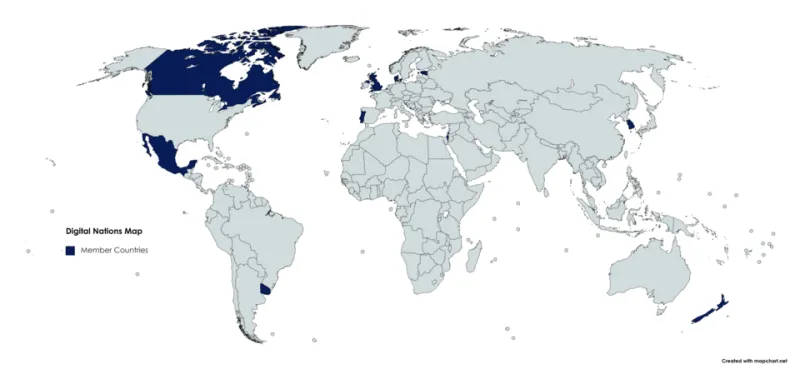
Photo: Bourenane Chahine, CC BY 4.0, via Wikimedia Commons
Streaming has been sold to American audiences as a kind of democratic revolution — an end to the gatekeeping that once restricted access to foreign and independent cinema to those who lived near an art house theater or maintained a relationship with a well-stocked video store. The pitch was compelling, and in some respects it has delivered. A viewer in rural Nebraska can now access a broader range of cinema than was available to residents of major metropolitan areas in 1995.
And yet the map of what is actually available to American subscribers is riddled with invisible borders. Licensing agreements, territorial exclusivity arrangements, and the commercial logic of regional rights holders mean that enormous bodies of work — entire national movements, decades of genre production, celebrated festival circuits — remain effectively inaccessible to US audiences through any legitimate streaming channel. The abundance is real, but so are the walls.
New Romanian Cinema: A Movement Hidden in Plain Sight
Few contemporary cinema movements have received more critical acclaim relative to their American viewership than the New Romanian Cinema — the loosely affiliated group of filmmakers, including Cristian Mungiu, Corneliu Porumboiu, and Cristi Puiu, who emerged in the mid-2000s with a distinctive aesthetic of long takes, naturalistic performance, and unflinching engagement with post-Communist social reality.
Mungiu's 4 Months, 3 Weeks and 2 Days won the Palme d'Or at Cannes in 2007. Puiu's The Death of Mr. Lazarescu is regularly cited by critics as one of the defining films of the twenty-first century. Yet neither film has maintained consistent, reliable streaming availability in the United States. They surface briefly on MUBI, disappear, and leave no permanent home.
The structural reason is straightforward: Romanian distribution rights are fragmented across multiple small rights holders, and the US market has not historically generated the licensing fees that would incentivize a major platform to acquire comprehensive access. For American cinephiles, this means that one of the most significant European movements of the past two decades exists largely as a critical reputation without a readily accessible body of work to support it.
What to do: MUBI remains the most reliable legal source for New Romanian Cinema in the United States, though its rotating catalog requires attentiveness. The platform's watchlist function is genuinely useful here — setting alerts for directors like Puiu, Porumboiu, and Radu Jude can prevent titles from cycling out unnoticed. The Criterion Channel has acquired select titles on an intermittent basis and is worth monitoring.
Turkish Exploitation Cinema of the 1970s: A Genre Tradition Almost Entirely Absent
The Turkish film industry of the 1960s and 1970s produced an extraordinary volume of genre pictures — action films, horror movies, fantasy adventures, and melodramas — that operated with a cheerful indifference to international copyright law and an inventive, low-budget energy that has made them objects of considerable cult fascination among the small number of American viewers who have encountered them.
Films like Dünyayı Kurtaran Adam (1982), colloquially known as Turkish Star Wars for its liberal borrowing of footage from the American original, and the various Tarkan adventure pictures have circulated in American cult communities primarily through gray-market channels. Legitimate streaming availability in the US is essentially nonexistent.
The rights situation for this material is genuinely complicated. Many of these films were produced by studios that no longer exist, and ownership of the underlying rights has passed through multiple hands over the decades. Acquiring clean US streaming rights would require navigating a labyrinth of Turkish estate law and rights fragmentation that no American platform has yet found commercially worthwhile.
What to do: Onar Films, a Greek specialty label, has produced physical media releases of several Turkish cult titles with English subtitles. These are the most reliable legal access point for American collectors. YouTube also hosts a surprising number of these films uploaded by Turkish cultural organizations, though subtitle availability is inconsistent.
Peruvian Queer Cinema and the Limits of Latin American Streaming
The past fifteen years have seen the emergence of a genuinely distinctive Peruvian queer cinema, centered on filmmakers like Javier Fuentes-León, whose Undertow (Contracorriente, 2009) received international festival attention, and a younger generation producing work that engages directly with Andean cultural identity and sexuality in ways that have no real equivalent elsewhere in world cinema.
For US audiences, this movement is almost entirely invisible on mainstream streaming platforms. Netflix's Latin American content acquisition has focused overwhelmingly on Mexican and Colombian production, with occasional Brazilian titles. Smaller national cinemas from across the continent — Peru, Bolivia, Ecuador, Paraguay — remain dramatically underrepresented regardless of critical standing.
What to do: The Fandor streaming platform has historically been one of the better US sources for Latin American independent cinema and is worth a subscription for viewers with a serious interest in this area. Film Movement Plus, another specialty US streamer, has acquired select Latin American titles. Directly supporting filmmakers through Vimeo on Demand, where several Peruvian indie productions have been made available by their creators, is both a legal and ethically sound option.
Practical Strategies for the Geographically Frustrated
Beyond platform-specific recommendations, there are several general approaches that American viewers can adopt to work within the legitimate boundaries of what is available.
First, public library systems are dramatically underutilized as a cinematic resource. The Kanopy streaming service, available free through most US public library systems, carries a substantial catalog of international and independent cinema that skews toward exactly the kind of work discussed here. Hoopla Digital, available through the same library infrastructure, supplements it usefully.
Second, the physical media market — despite its commercial decline — remains the most reliable long-term access point for obscure international cinema. Specialty US distributors including Film Movement, Distrib Films US, and Icarus Films have brought considerable bodies of work to American audiences through DVD and Blu-ray that have never achieved streaming availability domestically.
Third, following the programming of US repertory cinemas — the Metrograph in New York, the Music Box Theatre in Chicago, the Alamo Drafthouse's national network — provides both direct access to rare screenings and advance intelligence about which titles are circulating in the US rights market and may soon find streaming homes.
The streaming map, in other words, has edges that most American subscribers never see. The films on the other side of those borders are not obscure because they lack merit. They are obscure because the commercial architecture of digital distribution has reproduced, in new form, the same geographic inequities that defined cinema access for the previous century. Knowing where the walls are is the first step toward finding the doors.