Buried Alive: How to Excavate the Films Streaming Platforms Don't Want You to Find
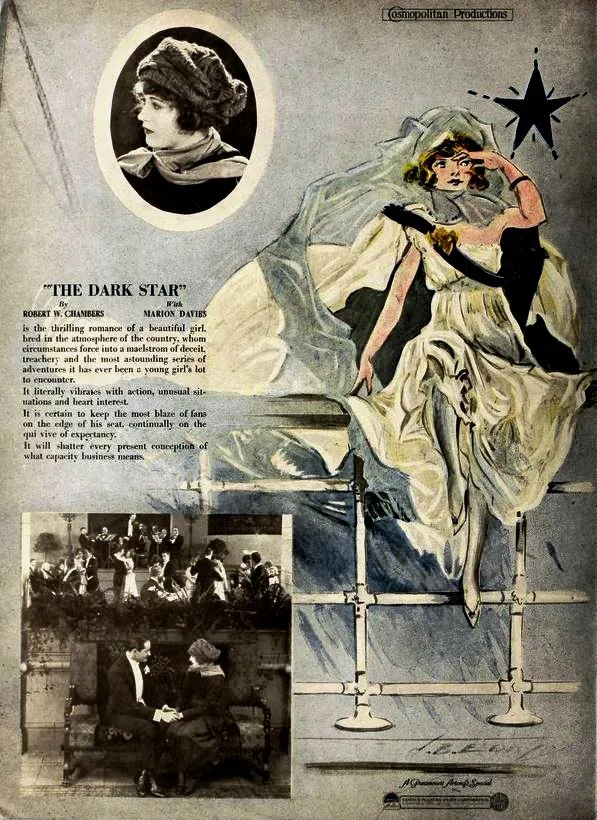
Photo: Cosmopolitan Productions, Public domain, via Wikimedia Commons
There is a particular kind of frustration known to the dedicated cinephile: the sensation of scrolling through a streaming platform's seemingly infinite catalog, watching the same algorithmically endorsed titles rotate through the homepage carousel, while somewhere in the depths of that same library, an extraordinary film sits in complete darkness. It has been licensed. It has been uploaded. It exists, technically, within reach. And yet the platform's recommendation engine will never surface it, because the machine was not built for discovery — it was built for retention.
At Last Hole Cinema, we have spent considerable time navigating these digital wastelands, and what follows is both an analysis of why independent film suffers under algorithmic curation and a practical guide for those willing to search beyond the carousel.
The Architecture of Algorithmic Neglect
To understand why cult and independent cinema disappears inside streaming platforms, one must first understand what these platforms are actually optimizing for. Netflix, Hulu, Amazon Prime Video, and their contemporaries are not curators. They are engagement machines. Their recommendation systems are trained on watch-time data, completion rates, and user interaction patterns — metrics that inherently favor content with broad, pre-existing recognition.
A film that premiered at the Tribeca Film Festival to a house of four hundred enthusiastic viewers generates almost no behavioral data upon its streaming debut. Without that data, the algorithm has nothing to amplify. The title sinks. Meanwhile, a mid-budget thriller with a recognizable cast accumulates watch-time from passive viewers who left it running in the background, and the algorithm interprets this as a signal of quality.
This structural bias is not malicious. It is simply a consequence of designing systems around the average user rather than the discerning one. The result, however, is a streaming graveyard — populated by films that deserved audiences and never found them.
Lesser-Known Filters and Search Strategies
The good news is that these platforms are not entirely opaque. With deliberate technique, it is possible to circumvent the recommendation layer and access a platform's deeper catalog.
On Netflix, the most powerful tool available to US subscribers is the hidden genre code system. By navigating to netflix.com/browse/genre/ followed by a numerical code, users can access hyper-specific subcategories that never appear in standard browsing. Genre code 11994 surfaces independent dramas. Code 4195 opens cult horror. Code 52849 accesses the platform's independent film library more broadly. These pages are not advertised, but they remain functional and are updated regularly.
On Amazon Prime Video, the filter system is more accessible but frequently overlooked. Sorting by "IMDb Rating" in descending order within the "Independent" genre category surfaces critically regarded films that the standard recommendation engine would never present. The platform also maintains a substantial collection of titles through its channel add-ons — MUBI, Fandor, and Criterion Channel each offer curated independent libraries accessible through Prime at additional cost, and each operates with genuine editorial intelligence.
Tubi, which operates as a free, ad-supported platform, is perhaps the most underrated destination for cult cinema in the United States. Because Tubi's business model depends on volume rather than exclusivity, it has licensed an enormous range of independent, foreign, and genre films that the subscription platforms have ignored. Its search functionality is rudimentary, but browsing by decade within its "Independent" category frequently yields extraordinary results.
The Criterion Channel deserves particular mention as the single streaming platform in the US that functions as a genuine curatorial institution. Its thematic collections, filmmaker retrospectives, and willingness to program genuinely challenging work make it indispensable for the serious viewer. At approximately eleven dollars per month, it represents the most defensible subscription in independent cinema.
Platforms Built for the Overlooked
Beyond the major services, several platforms exist specifically to serve the audience that algorithmic curation has abandoned.
MUBI operates on a rotating model, offering thirty films at any given time, each available for thirty days. Its programming is internationally focused and editorially rigorous. Films that received brief theatrical runs in New York or Los Angeles before disappearing entirely often find a second life on MUBI's platform, reaching the audience they were always intended for.
Fandor has undergone several ownership changes in recent years but continues to maintain one of the more substantial libraries of American independent cinema available for streaming. Its catalog includes a significant number of films from the 1990s and early 2000s independent wave — the era of Sundance breakouts and regional festival favorites — that have since become extremely difficult to locate.
Plex and Pluto TV, both free services, carry surprisingly deep catalogs of cult and genre independent film. The interface is less polished than the major platforms, but the content is frequently remarkable.
The Community as Compass
No algorithm will serve the cult cinema enthusiast as reliably as a community of like-minded viewers. Letterboxd, the social film logging platform, has become an essential discovery tool precisely because its lists and reviews are generated by actual cinephiles rather than engagement optimization systems. Searching Letterboxd for lists with titles such as "films that deserve more attention" or "underseen streaming gems" will consistently surface titles that no platform's homepage will ever recommend.
Subreddits dedicated to specific genres — r/TrueFilm, r/horror, r/criterion — function similarly, as do Discord servers organized around particular directors, movements, or national cinemas. The institutional knowledge held within these communities represents a form of cultural preservation that no corporation has managed to replicate.
The Obligation of the Dedicated Viewer
There is something that functions almost like moral responsibility in the act of watching and advocating for overlooked independent film. When a viewer logs a film on Letterboxd, writes a review, shares a discovery with a friend, or simply completes a watch rather than abandoning it after twenty minutes, they are generating the kind of signal that can, incrementally, shift a film's visibility.
The streaming graveyard is real. But graveyards are not permanent. With the right tools, the right communities, and the willingness to move beyond the carousel, the films buried within them can be recovered — and given, at last, the audience they were made to find.
